

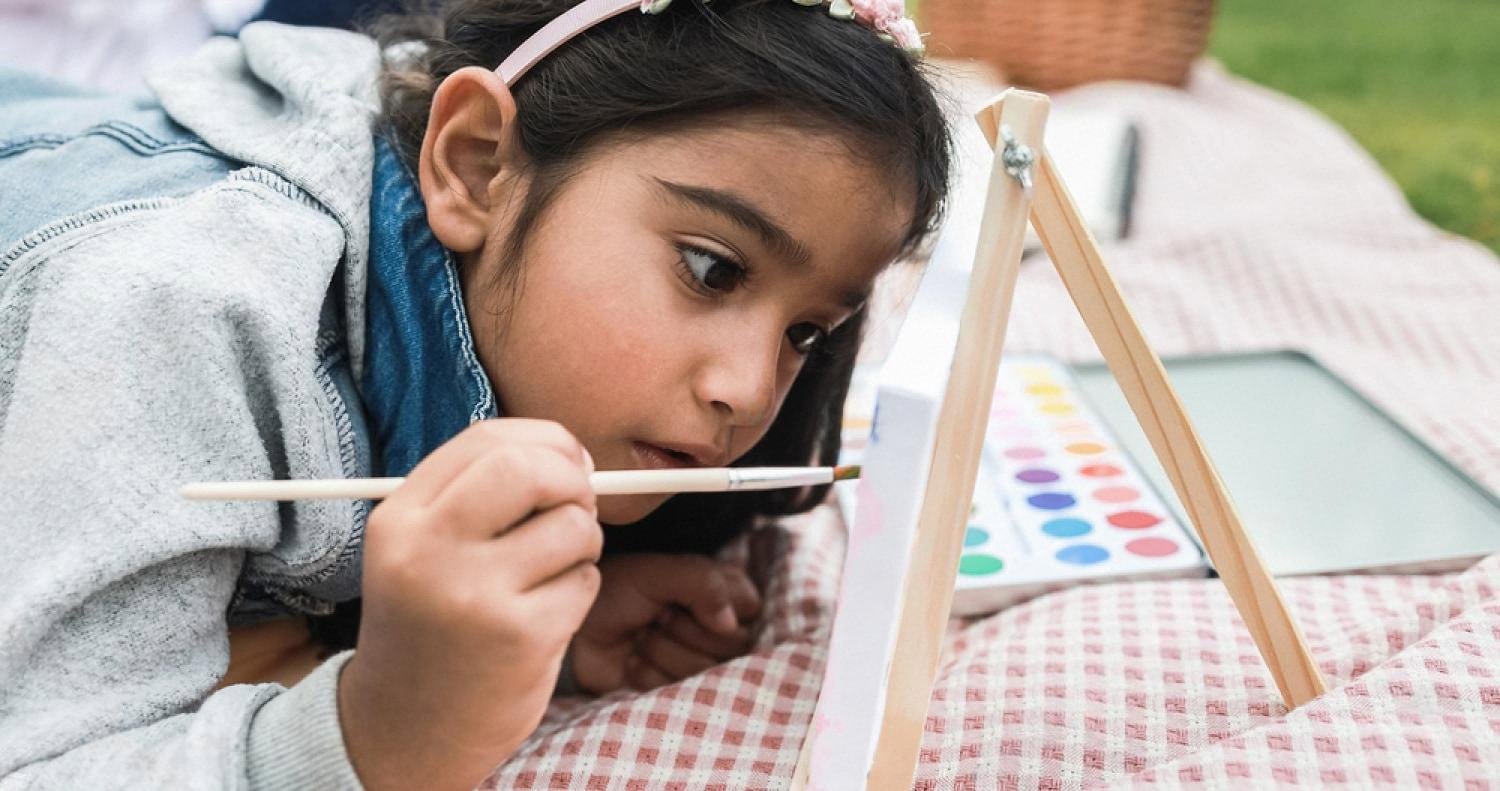
“Every child is an artist. The problem is how to remain an artist once we grow up.”
Why it matters
Creativity as a window into your child
In the UAE, parents juggle demanding schedules, international schooling options and a huge menu of after-school clubs. Between homework and screens, it is easy to miss the quieter signal a child sends through their drawings, songs or paper cut-outs. Creative activities are not just a way to fill an afternoon in Dubai or Sharjah, they are one of the clearest windows into what a child feels, how they see their family, and where their natural strengths sit.
A child rarely walks up and announces, “I want to be a designer” or “I am anxious about my new class.” But hand them paper, paint and time, and both things surface. The colours they reach for, the size of the figures they draw, the calm or chaos in the composition, all of it is data if you are willing to look.
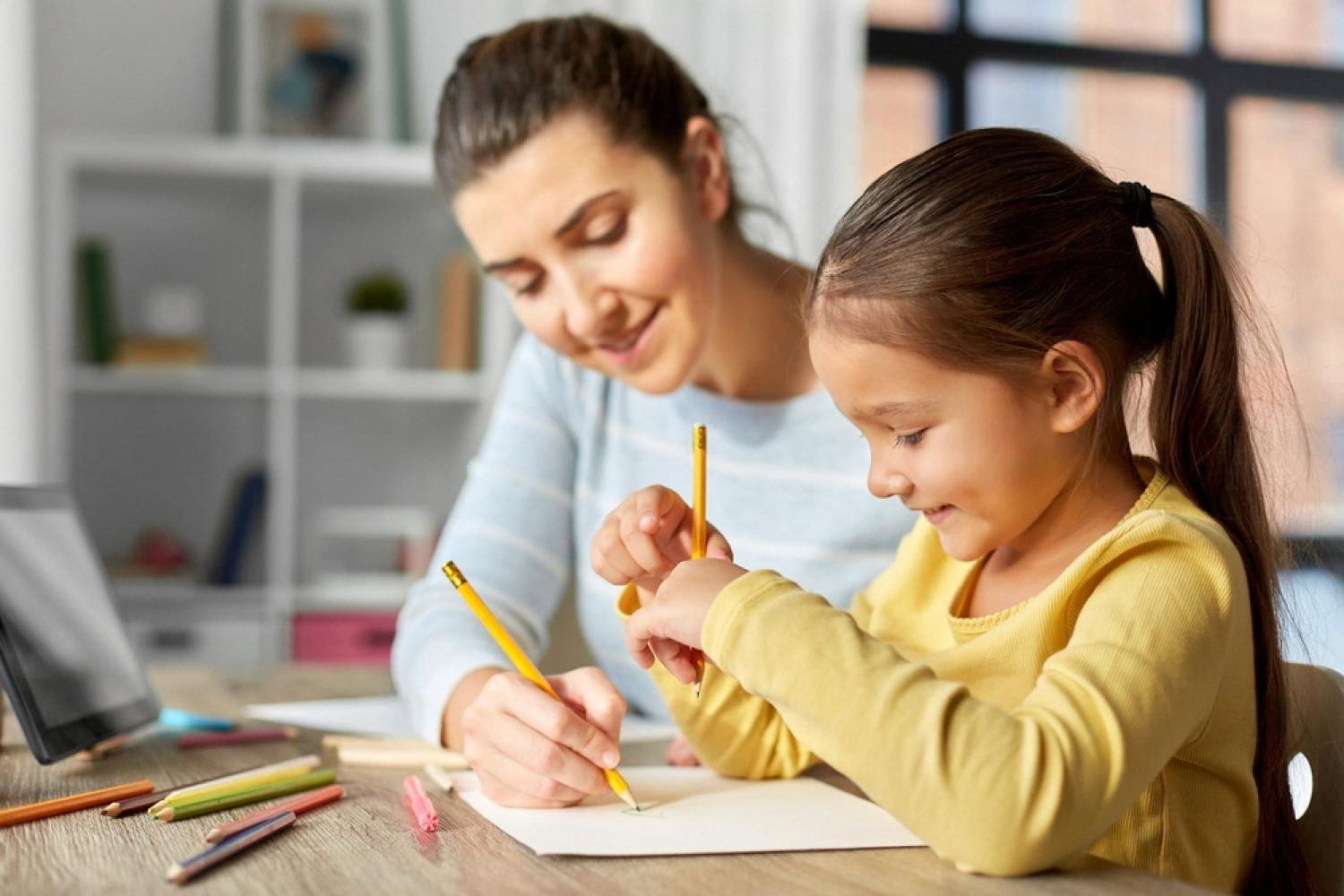
What different creative activities actually reveal
Not every art form tells you the same thing. A shy child who freezes on a stage might come alive with clay in their hands. A restless one who cannot sit through drawing might thrive in a drama club. The point is not to force a single “best” hobby, but to try enough different mediums that a real pattern shows up. Many schools in Ajman and across the Emirates now build these options directly into the weekly timetable, which makes early exploration easier than it used to be.
- Drawing and painting reveal how a child organises the world visually. Watch how they place people on the page, how big they draw themselves compared to family members, and whether they use warm or cold colours for certain topics. This is where an early artistic talent usually shows first.
- Drama and theatre clubs show whether a child is at ease speaking in front of others, whether they lead a scene or support it, and how quickly they memorise lines. It is also the fastest way to help a shy child work through stage fright in a safe group.
- Paper crafts and origami test patience, spatial thinking and fine motor control. A child who can plan a 3D paper animal from a flat sheet is already using the same mental muscles an engineer or architect will need later.
- Music and rhythm games pick up on ear, timing and memory. Even simple clapping games in Arabic and English reveal whether a child locks into a beat naturally.
- Storytelling and writing show imagination and emotional vocabulary, the ability to name feelings rather than just act them out.
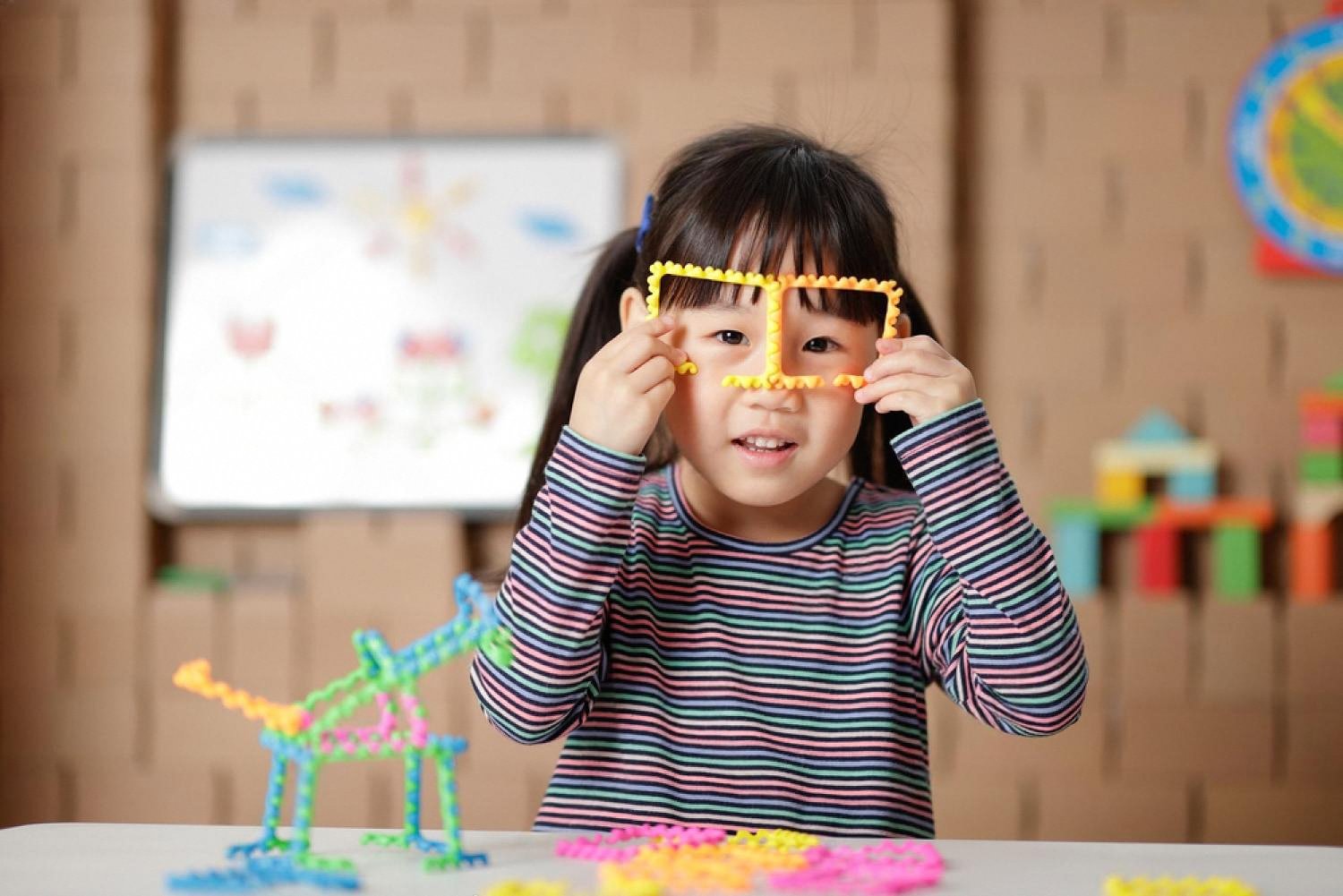
Emotions on the page, not just talent
The second job creative work does, and it is arguably the bigger one, is give children a safe outlet for feelings they cannot yet put into words. A seven year old cannot always explain that a house move to Abu Dhabi felt frightening, or that a new sibling has shifted the balance at home. But you will see it: the family drawing where one figure stands far off to the edge, the picture with a stormy sky, the paper puppet that keeps “getting in trouble” in every story.
According to research summarised by art therapy literature expressive activities help children process events they lack the vocabulary to describe directly. That does not mean every crayon drawing needs to be analysed like a Rorschach test. It means paying attention, without over-interpreting, and giving your child regular unstructured time to create.
The key word is unstructured. Colouring books and paint-by-numbers are fun, but they rarely tell you anything. A blank sheet does.
Practical steps for parents in the UAE
You do not need a studio or an expensive Saturday programme to start. What matters is variety, consistency and a genuinely relaxed atmosphere at home.
- Keep a “yes” drawer stocked with plain paper, coloured pencils, scissors, glue and coloured card, accessible without asking.
- Rotate the medium every few weeks: watercolours one month, clay the next, then origami, then a family theatre night.
- Ask open questions about the finished work: “Tell me about this part” beats “What is that?” every time.
- Sign up for one structured club a term (art studio, drama group, music class) and let your child drop it after a term if it is truly not clicking.
- Save dated work in a simple folder. Patterns show up over six months that you would never notice week to week.
- Avoid grading or correcting. “The sun does not look like that” kills more talent than any lack of lessons.
- Look for community events, malls and cultural centres in Dubai, Sharjah and Ajman regularly host free family art days worth exploring.
The long view
Talent is a pattern, not a moment
No single drawing proves your child is the next architect, and no shaky first performance means they are not made for the stage. What you are looking for is a repeated pull: the activity they return to when nobody is telling them what to do, the medium where they lose track of time, the one where their skill visibly improves month after month.
Give them the materials, give them the room, and stay curious rather than directive. The talents will show themselves, and along the way your child gets something almost as valuable: a healthy way to say what they feel.
Frequently asked questions
At what age should my child start creative activities?
You can begin as early as 18 to 24 months with simple finger paints, chunky crayons and torn paper collage. Structured classes (drama, formal art studios, music lessons) usually make sense from around age four or five, once a child can follow a group instruction and stay engaged for 20 to 30 minutes.
How do I tell the difference between a real talent and just a passing interest?
Look for three signals over a few months: the child chooses the activity without being prompted, their skill visibly improves, and they talk about it outside the session. A passing interest fades within weeks. A genuine talent keeps coming back, even after a break.
My child is very shy. Is a drama club a bad idea?
Often it is the opposite. A good drama group works in small ensembles first, with games and group scenes rather than solo performances. Many shy children in the UAE find it easier to speak as a character than as themselves, and the confidence carries back into daily life at school.
Should I be worried about dark colours or scary themes in my child’s drawings?
Not usually. Children experiment with black, red and monster figures as part of normal play and emotional exploration. Worry only if the same distressing theme appears repeatedly over weeks, is paired with changes in sleep, appetite or behaviour, or the child says something specific about themselves that concerns you. In that case, speak with a child psychologist rather than interpreting the drawings yourself.
How much screen-based creative activity is okay?
Digital drawing and stop-motion apps can be great, but they should sit alongside hands-on work, not replace it. Physical materials build fine motor skills, spatial reasoning and sensory awareness in ways a tablet cannot. A reasonable balance is one screen-based creative session for every two or three hands-on ones.
What if my child wants to quit an art or music class after a few weeks?
Ask why before deciding. Sometimes it is the teacher, the group or the time of day, not the activity itself. A useful rule is to finish the term you committed to, then reassess. If they still want out, respect that and try a different medium. Forcing a child to continue a creative pursuit is one of the fastest ways to kill the very talent you hoped to grow.